Context
In the late 1960s, aerospace engineer Gary Flandro discovered that a rare alignment of the outer planets, occurring once every 175 years, would allow a spacecraft to use gravitational assists to visit Jupiter, Saturn, Uranus, and Neptune in a single mission. The window opened in the late 1970s. NASA seized the opportunity.
The Deed
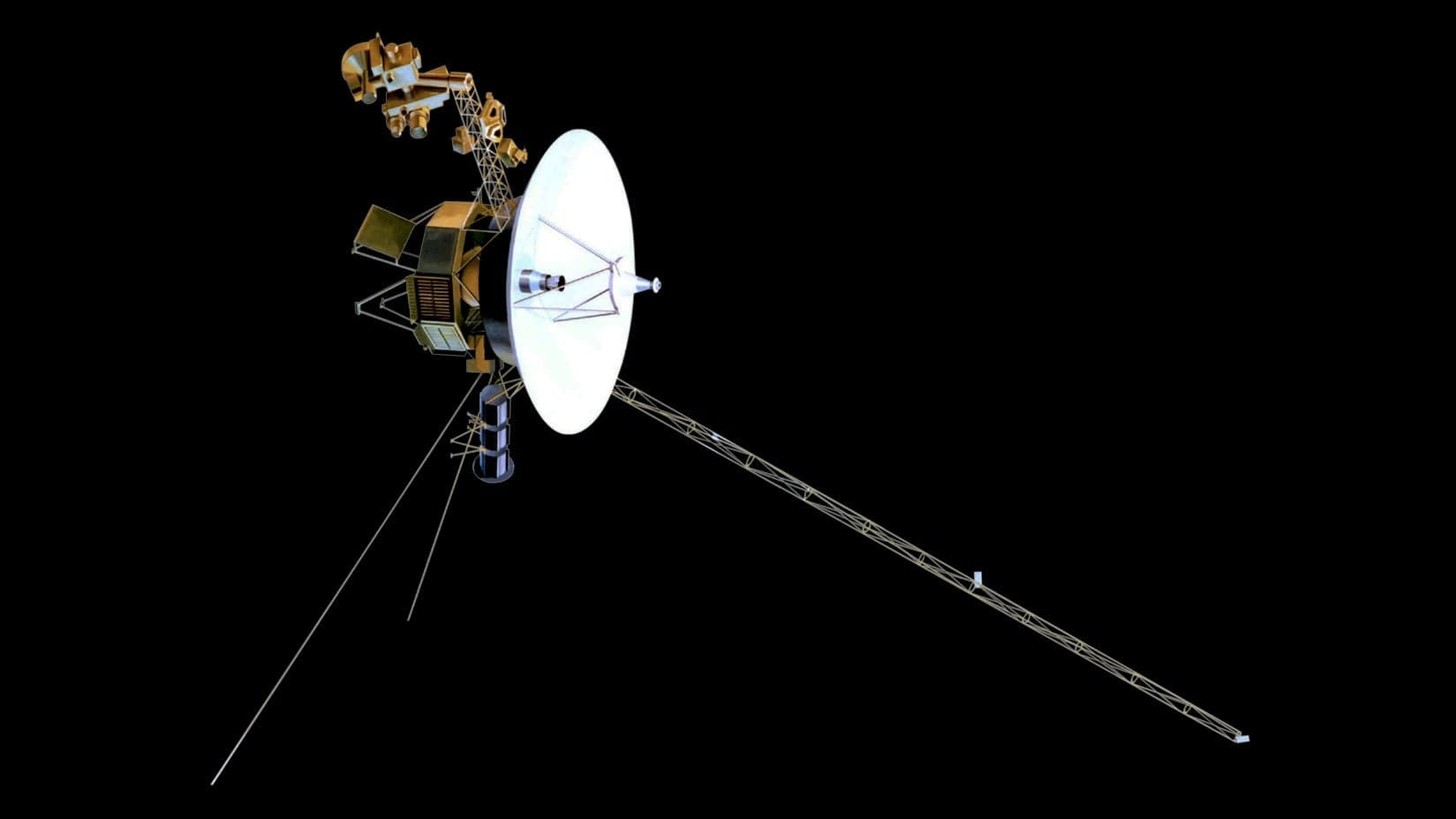
Voyager 2 launched on August 20, 1977, followed by Voyager 1 on September 5. Despite launching second, Voyager 1 reached Jupiter first due to its faster trajectory. The spacecraft returned thousands of images that rewrote textbooks: active volcanoes on Jupiter's moon Io, a subsurface ocean on Europa, complex rings around Saturn, the bizarre tilt of Uranus, and geysers on Neptune's moon Triton. Voyager 1 crossed into interstellar space on August 25, 2012.
Why It Matters
The Voyagers revealed the outer solar system as a dynamic, complex place teeming with geological and atmospheric activity. They discovered 23 new moons. The Golden Record, carrying sounds and images of Earth curated by Carl Sagan's team, represents humanity's most ambitious message to the cosmos. Both spacecraft continue transmitting data from beyond the solar system.
Brutal Truth
The Voyagers' nuclear power sources will die by approximately 2025, silencing them forever. Their Golden Records will almost certainly never be found by anyone. The vast distances of interstellar space mean it will take 40,000 years for Voyager 1 to pass near another star. They are, in all practical terms, messages in a bottle thrown into an infinite ocean.
By the Numbers
- 15 billion miles from Earth (Voyager 1, as of 2024)
- 23 new moons discovered
- 175 years between planetary alignments
- 40,000 years until Voyager 1 nears another star system